My wife was studying light and form in a drawing class. I made her a web page with a white sphere on a table. She could open it on her phone and move the light without learning a 3D app first.
Start with the lamp off to one side. Before you raise it, try to picture what will happen to the dark part of the sphere and to the shadow on the table. They're both shadows, but they're not the same thing.
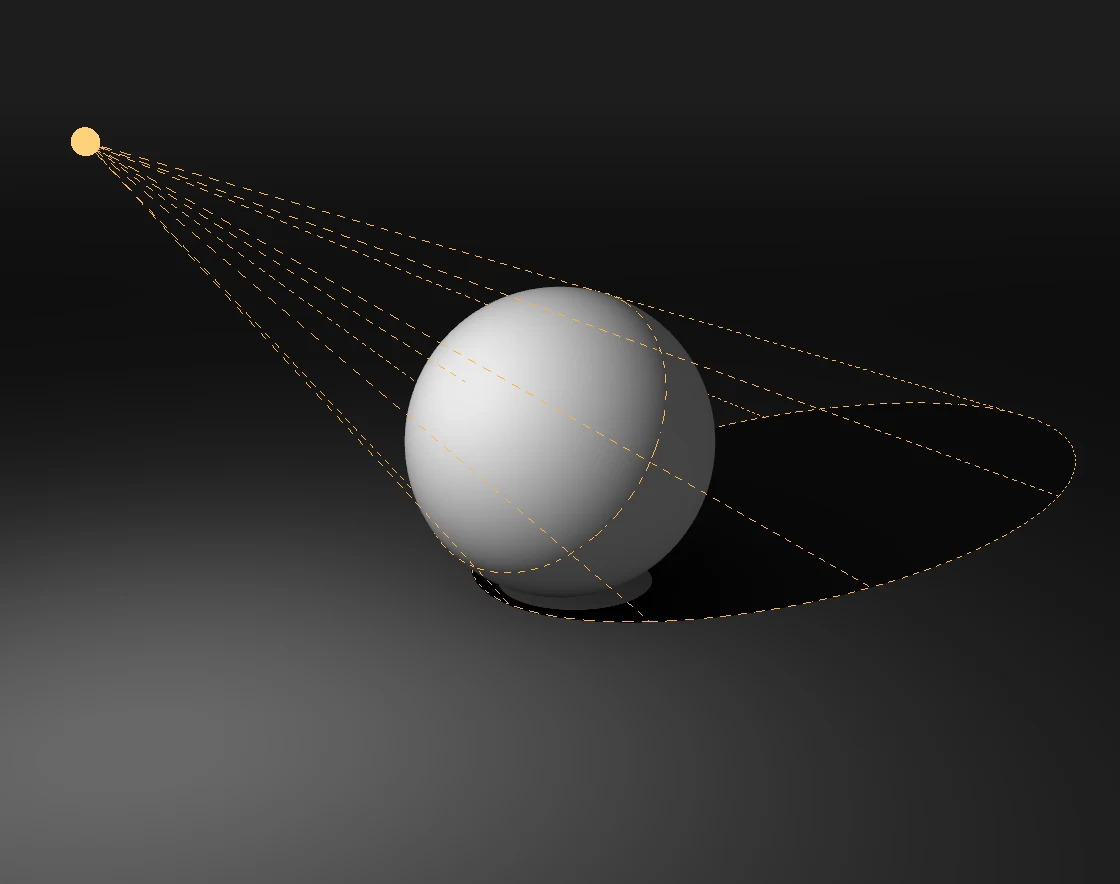
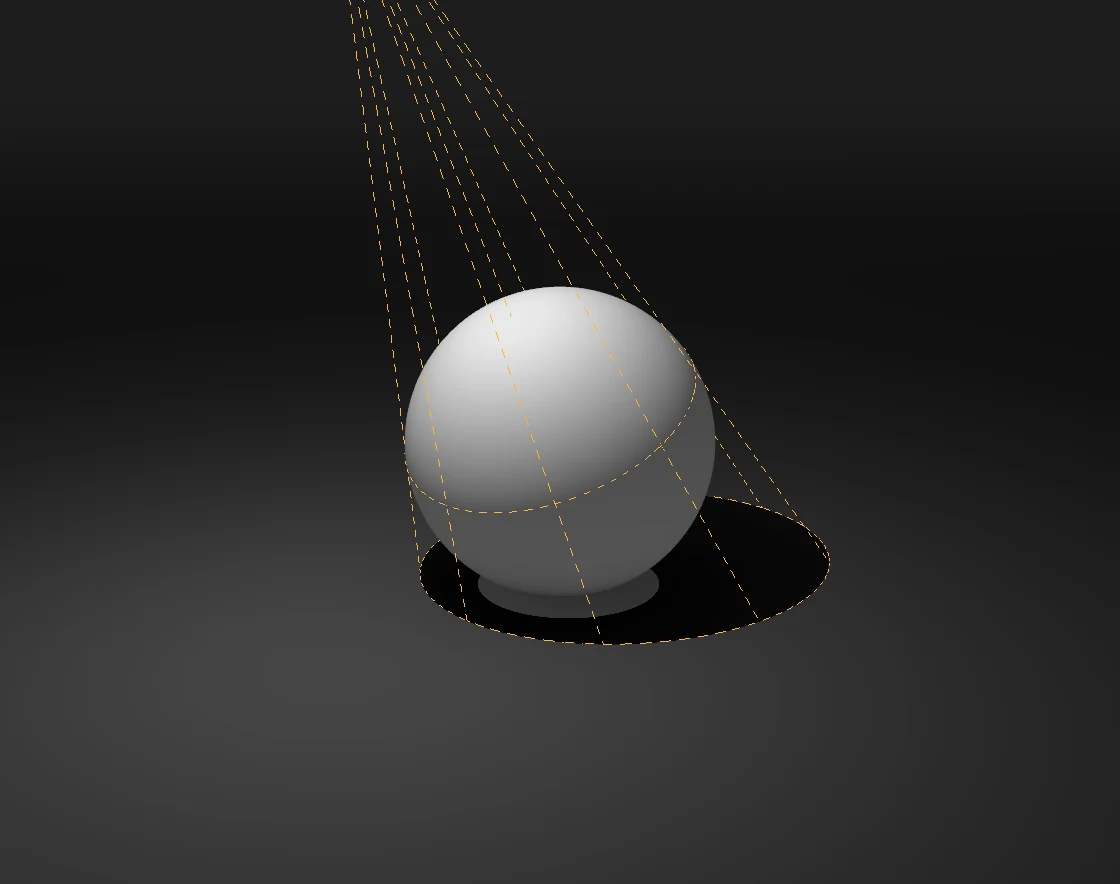
The dark side of the sphere is in form shadow. Its surface turns away from the lamp. The dark patch on the table is a cast shadow. The sphere is in the way. Raising the lamp moves the boundary on the sphere down while bringing the shadow on the table closer to the sphere.
Draw the rays
I wanted to see the boundaries between the different parts of light and form: where the light ends on the sphere, and where the cast shadow ends on the table. That's why I asked for dotted lines. To draw those rays, I needed more than the direction the light was coming from. I needed to know where the lamp was, including how far it was from the sphere.
Some of those rays just graze the sphere. Where they touch, they trace the boundary between direct light and shadow, called the terminator. Keep following the same rays until they meet the table and you get the edge of the cast shadow. The two outlines come from the same set of rays. The images above use a point light so that edge stays sharp.
Leave the light there
The whiteboard also showed how to group the lighter parts of the sphere and the darker ones. In the tool, Squint blurs the fine shading, and Value bands reduces it to a few tones. Neither moves the lamp. They change what you can pick out in the same setup.
There's a limit to what I'd take from a render like this. The table bounce is an approximation. If you need to know what a particular lamp does to a plaster sphere in a room, put one on a table and look at it.
Open the lower-lamp setup. Change just Height and see if the shadows go where you expected. If you find a setup you want to draw, Copy link keeps the light and the camera where you left them.