Echo tuner
Shape an echo with delay time, feedback, mix, and tone. Try a synthesized test sound or use your microphone with headphones on your phone, tablet, or computer.
Tools, art studies, and tech demos
Try an experiment, then open How it works for the technique behind it. The write-ups explain what to change, what to look for, and where each model stops short of the real thing.
Start with how a painting filter works or how a computer finds edges. For drawing, try perspective construction boxes or a 3D lighting study. Browse the camera experiments, art and drawing tools, or audio experiments together.
Shape an echo with delay time, feedback, mix, and tone. Try a synthesized test sound or use your microphone with headphones on your phone, tablet, or computer.
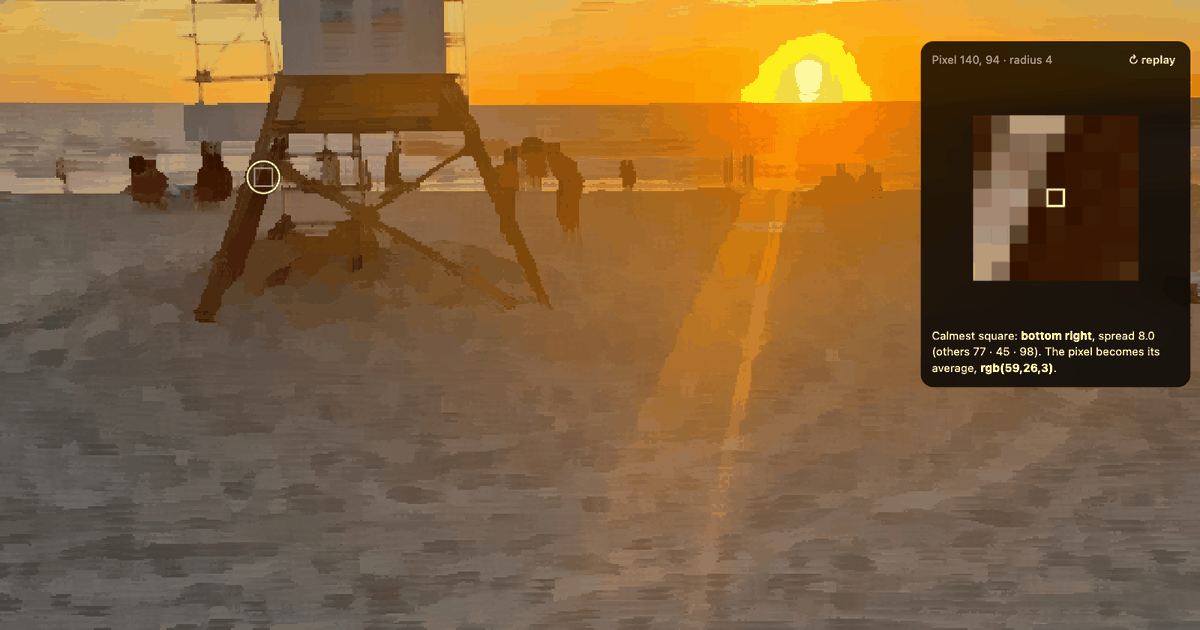
How the Kuwahara filter turns a photo into a painting: compare it with a blur, tap any pixel to watch it choose, and see the eight-sector version run live.
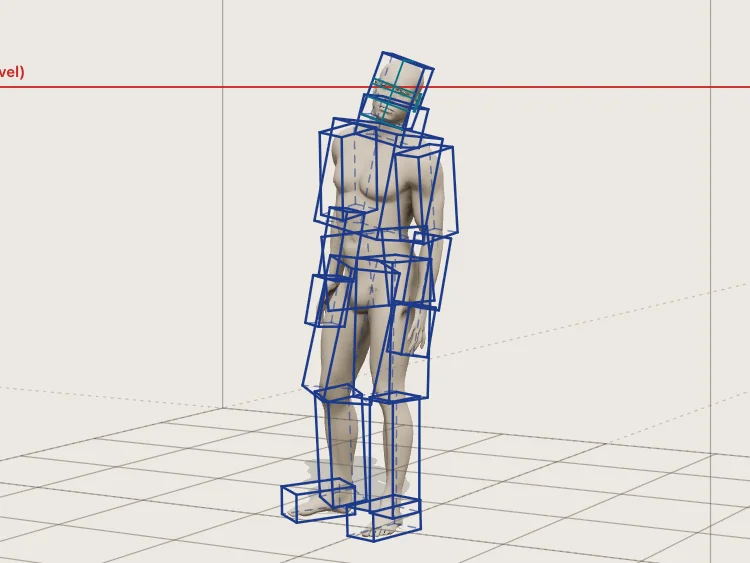
Explore figure and head perspective with posable models, construction boxes, camera lenses and vanishing-point guides. Export a drawing reference or transparent overlay.
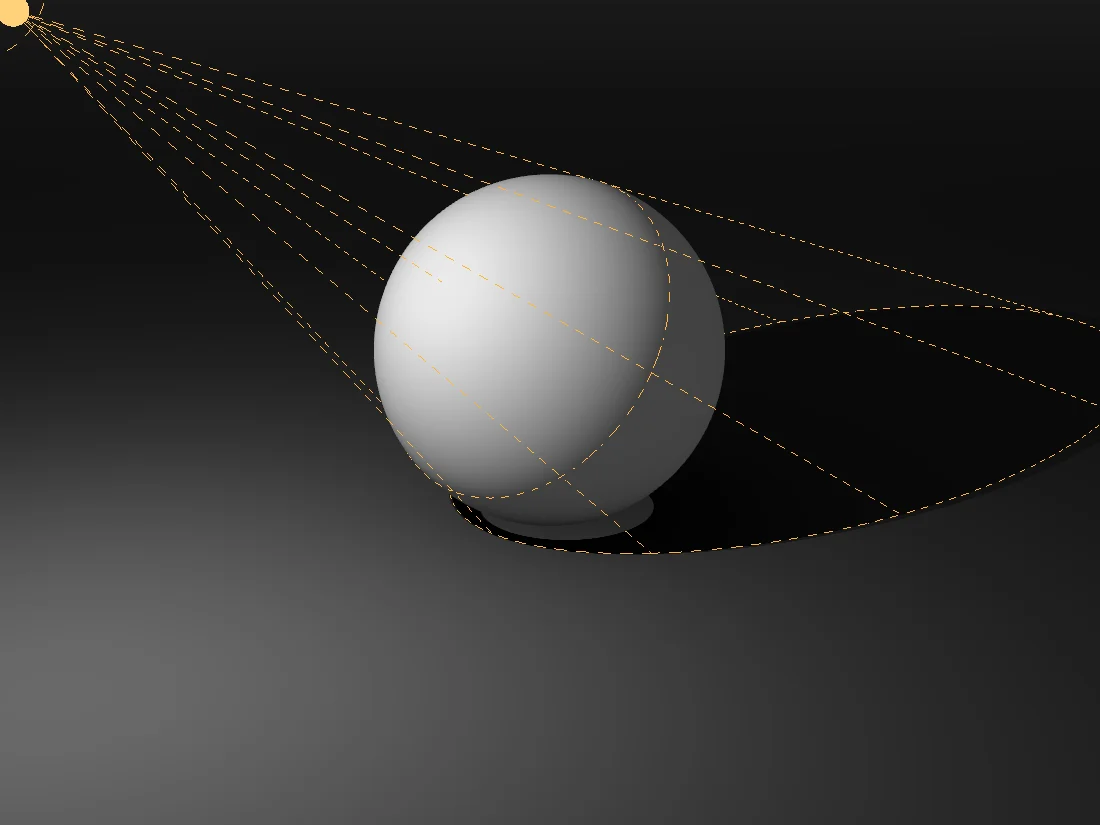
Study light and shadow on a white sphere. Adjust light direction, size, reflected light and camera lens, then compare contours, blurred values and value bands.
Explore psychedelic-inspired camera art with breathing warps, melting feedback, motion trails, and repeating edges. A visual effect, not a drug simulation.
Turn a camera image into sumi-e-inspired ink washes. Learn how smoothing, tapered edge strokes, dry-brush texture, and simulated paper bleed create the look.
Explore a live pencil sketch filter with directional contours, tone-driven hatching, cross-hatched shadows, colored pencil, and procedural paper texture.
Explore a live watercolor camera filter built from Kuwahara smoothing, soft tone layers, simulated wet edges, pigment variation, and procedural paper.
Study a camera image as two to five gray values. Use squint blur, a lightness split, and a pixel probe to explore notan and painting composition.
Make a live skate-video look with fisheye-style distortion, VHS color smear, scanlines, tape noise, and a date stamp. Learn how the WebGL effects combine.
Create audio-reactive camera visuals with glowing edges, posterized colors, and feedback trails. Learn how frequency bands and onset detection drive the image.
Learn Sobel edge detection with a live camera walkthrough: grayscale, Gaussian blur, horizontal and vertical gradients, edge strength, and thresholding.
Turn a live camera image into a cartoon with Kuwahara smoothing, tone bands, and Sobel outlines. Explore how each stage shapes the cel-shaded look.
Compare color vision deficiency simulation, experimental daltonization, and bold camera outlines. Learn the color transforms and their accessibility limits.
Try a red-cyan anaglyph camera filter and learn how channel separation creates binocular disparity from one image, without reconstructing scene depth.
Compare composition grids on photos and artwork. Overlay thirds, golden spirals and diagonals, with optional object-detection alignment scores, not beauty ratings.
A mantis shrimp-inspired camera effect with vivid color and animated edge shimmer. Explore its WebGL shaders and why it is not literal animal vision.
Explore a simplified dog color vision filter, with blue-yellow color mapping and illustrative blur and contrast controls. Learn what it cannot simulate.
Explore camera-based pulse detection as a sound experiment with synth clicks, stereo tones, and MIDI clock. An educational demo, not a medical heart-rate monitor.
Compare thirds, tenths, and decimal inches with 1/16-inch tape marks. See the nearest fraction and rounding difference on an illustrative, uncalibrated screen ruler.
Compare cage spheres, interlocking bands and an Escher-inspired sphere in one interactive drawing studio, with adjustable geometry and construction guides.
Sample nine points in a camera image and explore approximate Munsell-style hue, value, and chroma labels. Learn the limits of this RGB-based demonstration.
Experiment with bouncing spheres, gravity, elasticity, friction, and air resistance in a 3D box. Learn how overlap correction and collision impulses work.
See microphone sound as colored frequency bars. Learn how a Web Audio analyser turns short sound samples into a spectrum, and how that differs from a waveform.
Turn microphone input into rotating 3D frequency bars with Web Audio and Three.js. Explore how frequency bins control bar height and color.
Adjust lightness and chroma in a CSS OKLCH color wheel. Compare neutral and colorful regions and learn why Munsell labels are only a conceptual reference.
Explore OKLCH hue, lightness, and chroma in 3D. Adjust the color grid, click spheres for coordinates and hex values, and learn how OKLCH differs from Munsell.
Create branching particle trails with adjustable pulse intervals, colors, and particle counts. Learn how eight launch directions and random turns make the pattern.
Pose a sculpted figure with named movement controls. Study construction boxes, cut a section through the posed surface, and save a drawing reference or outline.
Smaller experiments with their own explanations: